

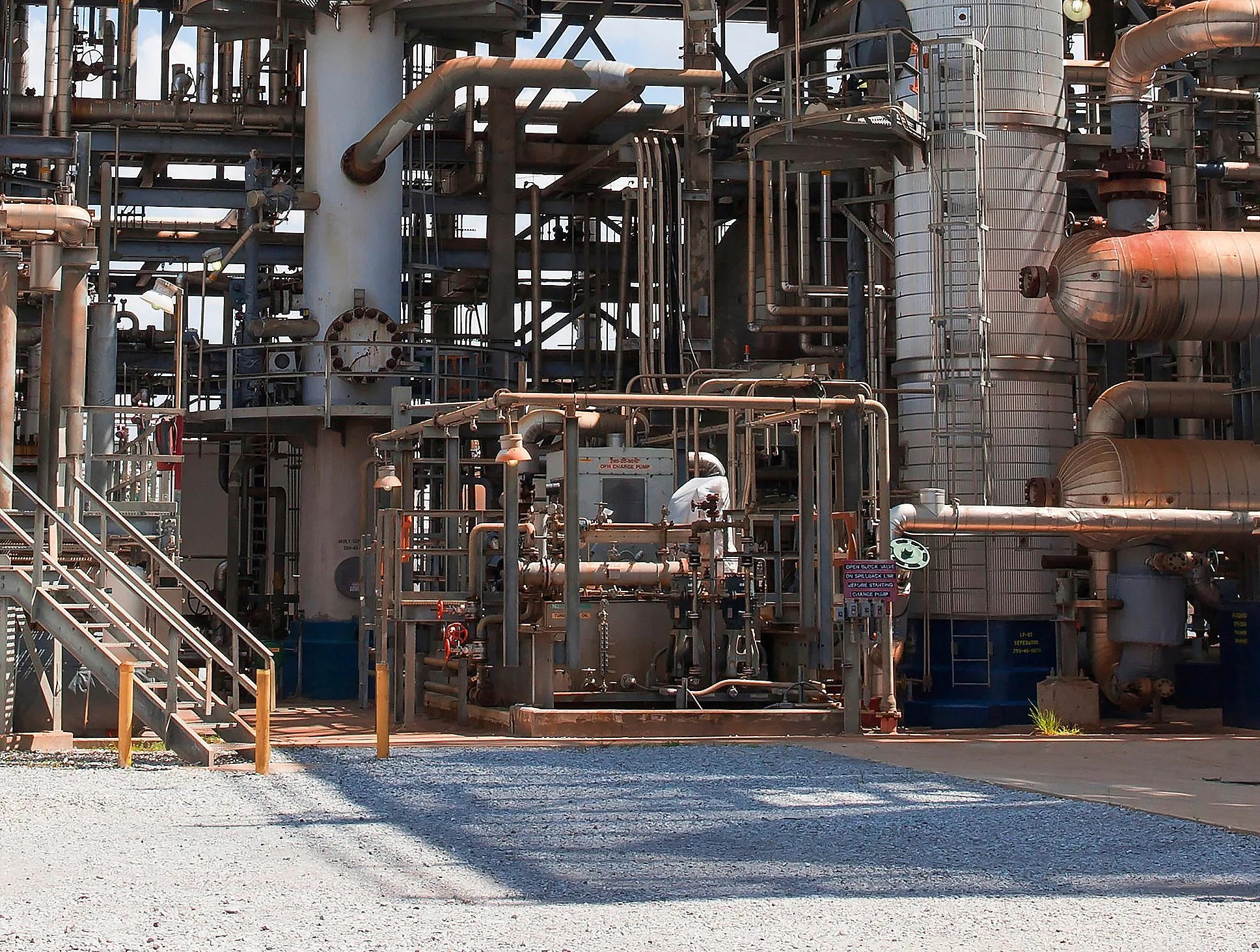
Hydrotreating and Hydrocracking
Though not the primary focus of Petroleum Energy, hydrotreating and hydrocracking are integral to its operations, producing cleaner and more efficient fuel products. Hydrotreating removes impurities such as sulfur, nitrogen, and heavy metals, enabling the production of fuels that meet strict environmental requirements like ultra-low sulfur diesel (ULSD). Hydrocracking further converts heavy crude fractions into lighter, more valuable products such as gasoline and jet fuel, maximizing the resource utilization of each barrel of crude oil.
Petroleum Energy complies with EU Industrial Emissions Directive (IED) standards, employing Closed Blowdown Systems (CBS) to minimize volatile organic compound (VOC) emissions. Catalysts used in these processes are managed under Basel Convention guidelines, ensuring safe handling, storage, and disposal. Products undergo ASTM D5453 sulfur testing to verify compliance, while SIL (Safety Integrity Level) 3-rated systems are installed to ensure operational safety in reactors. These systems are inspected semi-annually to maintain optimal pressure and temperature conditions, reflecting Petroleum Energy’s commitment to efficiency and environmental responsibility.